
Get in Touch
-
Phone
+92-323-2833936
-
Email Now
info@zyniti.com
-
Office # 454 ST 9, Sector 48/A Korangi 1/2 Karachi, Pakistan


Robotics is one of the most exciting and fast-moving fields in modern technology. From surgical robots performing delicate procedures to autonomous systems navigating warehouse floors, the promise of robotics is immense. Yet behind every breakthrough lies a set of stubborn, complex challenges that engineers, researchers, and businesses continue to wrestle with daily.
Whether you are a student exploring the field, a business owner evaluating automation, or simply someone curious about why robots still cannot fold laundry reliably, this guide breaks down the primary difficulties in robotics clearly and completely — going beyond surface-level lists to explain why these challenges exist and what is being done about them.
Robotics does not fail because engineers lack intelligence or funding. It fails in specific, predictable ways that are tied to the fundamental nature of physical, uncertain environments. Understanding these difficulties helps set realistic expectations, guides smarter investment decisions, and reveals where the next major breakthroughs are most likely to emerge.
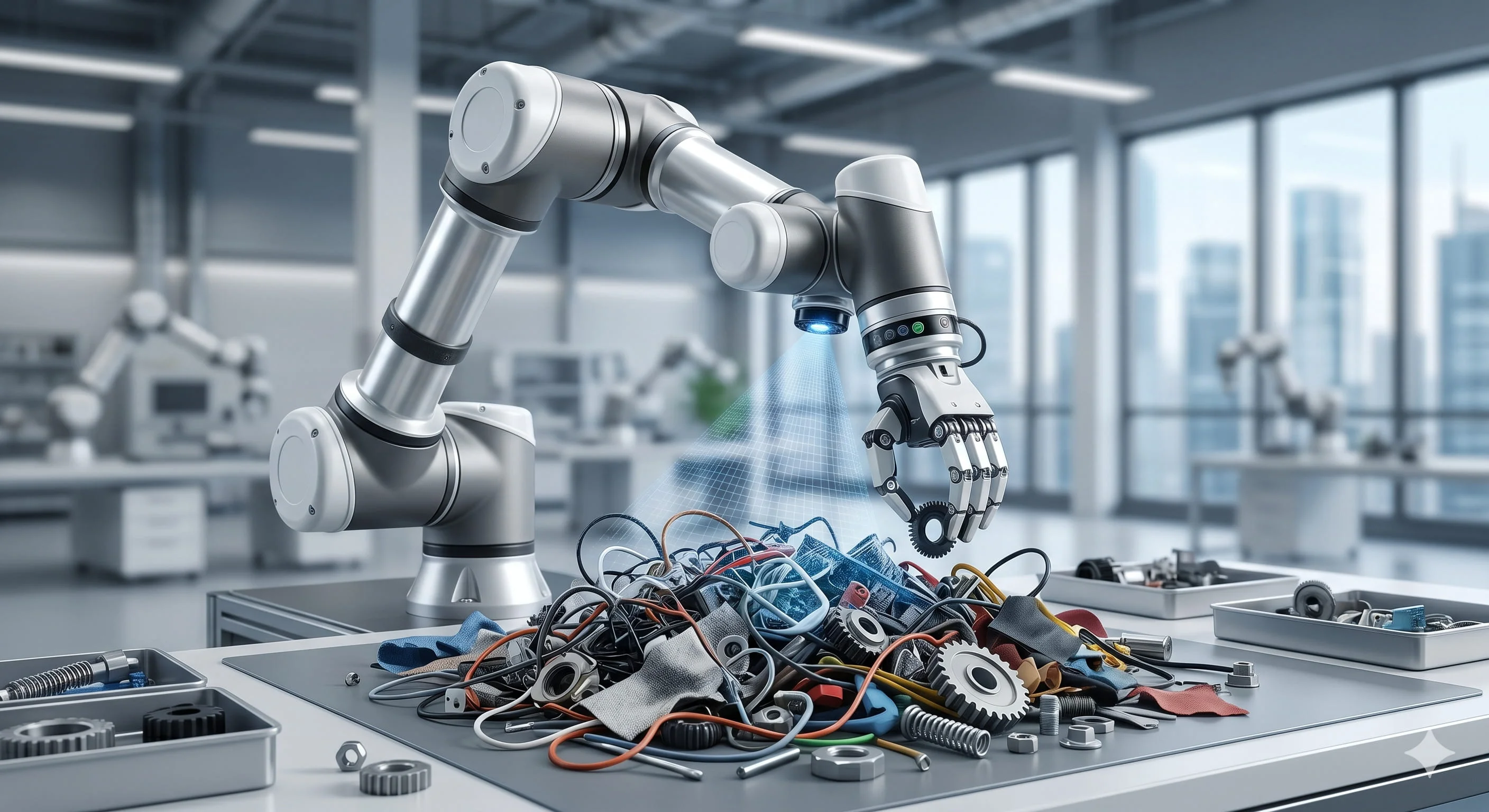
One of the most persistent primary difficulties in robotics is the sheer cost involved — not just at the hardware level, but across the entire implementation lifecycle. A single industrial robotic arm can cost anywhere from $25,000 to over $400,000, and that is before factoring in installation, software integration, safety infrastructure, maintenance contracts, and staff retraining.
For large manufacturers, integrating a new robotic system often means halting existing production lines, redesigning physical workspaces, and hiring specialist integrators who themselves carry a premium price tag. For small and medium-sized enterprises (SMEs), this financial barrier is often insurmountable. The return on investment (ROI) calculation becomes especially risky when production volumes fluctuate or market conditions shift unexpectedly — because a robot designed for one task does not easily pivot to another.
The cost challenge is not purely about money. It is also about time. Lengthy integration periods mean that by the time a robotic system is fully operational, the technology may already be approaching the next generation, creating a cycle of reinvestment that many organizations struggle to sustain.
Humans perceive the world through a rich combination of sight, touch, sound, balance, and proprioception. Robots, despite having increasingly sophisticated sensors, still struggle to replicate this multisensory integration in real time. This is one of the deepest primary difficulties in robotics.
Consider a robot tasked with picking up objects from a conveyor belt. If the lighting changes, an item is placed at an unexpected angle, or a new type of packaging is introduced, the robot may fail entirely or perform poorly. Human workers adapt to such variations instinctively; robots require explicit reprogramming or advanced machine learning models that have been trained on thousands of similar scenarios.
Tactile sensing — the ability to gauge pressure, texture, and the fragility of an object — remains particularly underdeveloped. A robot that cannot tell the difference between picking up a ripe tomato and a glass vial is a robot with a fundamentally limited range of applications. The development of soft robotics and advanced haptic sensors is making progress here, but widespread deployment remains years away for most industries.
Traditional industrial robots are marvels of precision when performing a single, well-defined, repetitive task. The problem begins the moment you ask them to do something different. This inflexibility represents one of the most commercially frustrating primary difficulties in robotics.
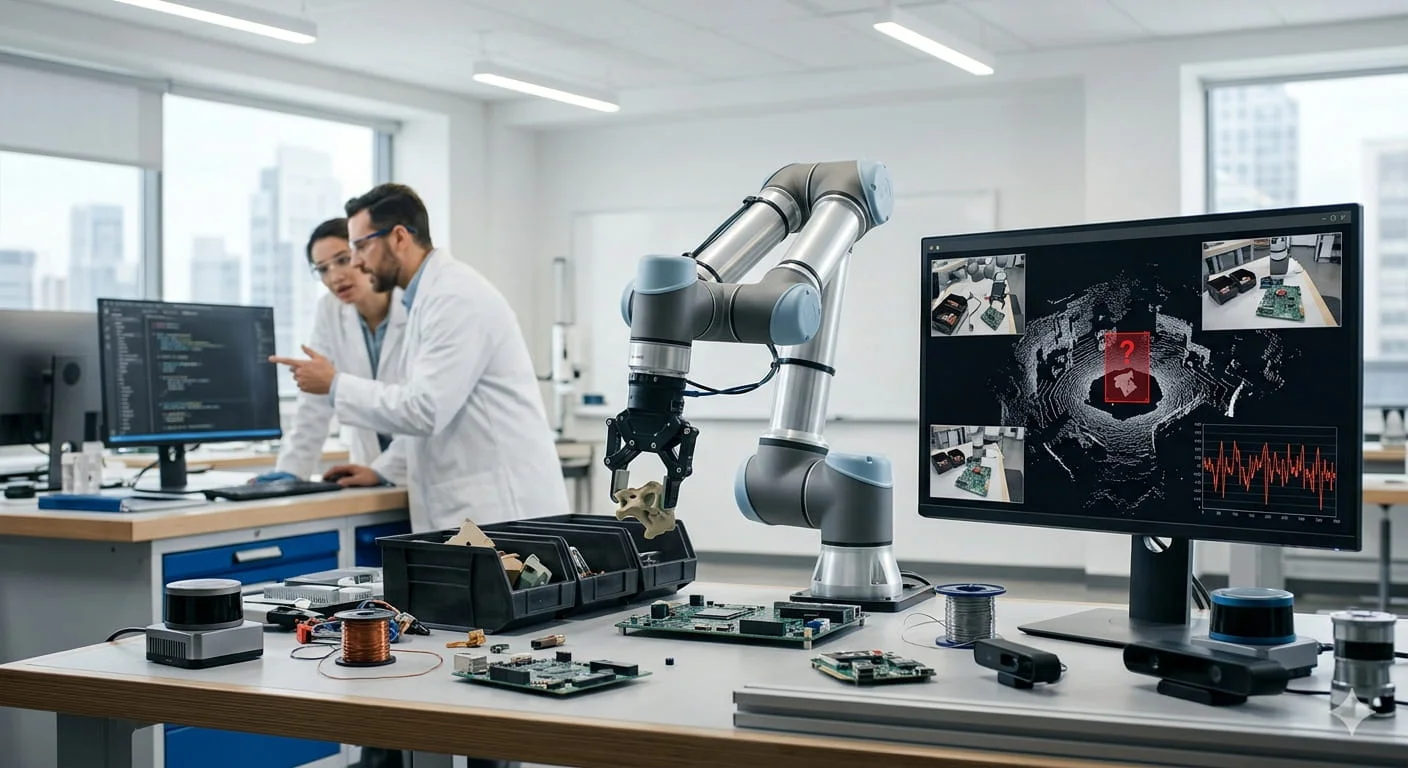
Each manufacturer tends to develop its own proprietary software ecosystem, which means that robots from different companies often cannot communicate with each other. Coordinating across a mixed fleet requires multiple application programming interfaces (APIs), and in many cases, custom software built from scratch. When a production line needs to pivot — say, switching from assembling one product model to another — the reprogramming effort can eat into the very efficiency gains that justified the robot's purchase in the first place.
The emerging field of no-code and low-code robotics programming is working to change this. Platforms that allow line workers rather than specialist programmers to reconfigure robots through drag-and-drop interfaces or physical demonstration (known as "teach-by-demonstration") are beginning to appear in the market. However, these solutions are still maturing and are not yet suitable for all industrial contexts.
Perhaps no challenge receives more public attention than the question of how robots and humans can safely share the same space. This is both a technical difficulty and a regulatory one, and it sits at the heart of what makes deploying robots in real-world environments genuinely hard.
Industrial robots traditionally operate in caged-off areas precisely because their speed and force make them dangerous to anyone who enters their workspace. The rise of collaborative robots (cobots) — machines designed to work alongside humans — has changed this dynamic somewhat, but it has also introduced new layers of complexity. A cobot must be able to detect human presence, reduce speed or force in response, and make split-second decisions about whether a nearby movement is intentional or accidental.
Beyond physical safety, there is the subtler challenge of social and communicative interaction. Personal and service robots — those designed to assist in healthcare, hospitality, or home environments — must read human intent from facial expressions, tone of voice, and body language. Current AI systems can handle fragments of this challenge in controlled conditions, but in the unpredictable richness of real human environments, they frequently misinterpret context. This "cold" quality of human-machine interaction, where the robot responds technically correctly but without genuine understanding, remains one of the most widely cited primary difficulties in robotics among end users.
Mobile robots — whether autonomous ground vehicles, drones, or humanoid platforms — face a challenge that no amount of software sophistication can fully compensate for: batteries. Current battery technology imposes strict limits on operational range and uptime. A warehouse robot may need to return to a charging station every two to four hours, interrupting the very workflows it was meant to optimize.
This energy constraint shapes every design decision. A heavier robot carries more payload but drains its battery faster. A faster robot covers more ground but may run out of power before completing its route. Engineers working on robotic systems must constantly balance performance against energy consumption, and in many use cases — particularly outdoor or field robotics in agriculture, search-and-rescue, or military applications — this tradeoff is a critical operational limitation.
Advances in solid-state batteries, wireless charging infrastructure, and energy-efficient AI processors are slowly improving this picture, but the energy density gap between biological muscle and mechanical actuation remains enormous.
Much of the progress in robotics over the past decade has been driven by advances in artificial intelligence, particularly deep learning. Yet there is a growing recognition that the AI models powering today's robots are remarkably brittle when taken outside their training conditions. This is one of the most actively discussed primary difficulties in robotics research today.
A robot trained to navigate a hospital corridor may be baffled by a differently colored floor or an unfamiliar piece of medical equipment. An AI trained to recognize objects in a warehouse may fail when objects are partially obscured, wet, or stacked in an unusual configuration. This brittleness stems from the fact that current AI systems learn statistical patterns from data rather than building genuine models of the world — a distinction that matters enormously in dynamic, real-world environments.
Researchers are pursuing approaches such as transfer learning (applying knowledge from one domain to another), sim-to-real training (training in simulation and then deploying in the physical world), and embodied AI (learning through physical interaction with the environment). Each shows promise, but none has yet produced AI systems with the general adaptability that would make robots truly reliable outside carefully controlled settings.
The introduction of robotics into any workplace does not eliminate the need for skilled humans — it changes what skills are needed. This transition is a primary difficulty in robotics that is as much organizational as it is technical.
Workers on a factory floor who have spent years mastering a manual process may feel threatened by automation, and this resistance can sabotage even technically sound deployments. But beyond the human psychology, there is a practical skills gap. Operating, maintaining, troubleshooting, and improving robotic systems requires knowledge that is simply not yet taught widely in vocational training programs or engineering curricula. The result is that companies investing in robotics often struggle to hire the talent needed to keep their systems running effectively.
Successful robotic deployments tend to combine good technology with serious investment in change management and ongoing training. Organizations that treat robotics as a plug-and-play solution rather than a long-term process almost always encounter higher-than-expected costs and lower-than-expected performance.
As robots become more capable and more embedded in consequential decisions — medical diagnosis, infrastructure inspection, law enforcement support — questions of accountability, privacy, and fairness become pressing. If a surgical robot makes an error, who is legally responsible? If a security robot uses facial recognition to make a decision that leads to harm, what recourse exists for those affected?
These are not hypothetical questions. Regulatory frameworks around the world are still catching up with the pace of robotic deployment. The lack of global standards for robot safety, communication protocols, and data sharing also creates fragmentation: a robotic system certified for use in one country may require completely different certification processes in another, adding cost and slowing adoption.
Industry bodies and government agencies are working on harmonizing standards, but the diversity of robotic applications — from nano-robots in medicine to massive autonomous mining equipment — makes a unified framework extraordinarily difficult to build.
None of the primary difficulties in robotics are insurmountable, and the pace of progress across hardware, software, and regulation suggests that many of today's limitations will look modest in retrospect. The coming decade will likely see robots that are cheaper to deploy, smarter in unstructured environments, safer to work alongside, and more energy-efficient than anything currently available.
But progress will be uneven. Some domains — logistics, structured manufacturing, certain surgical applications — will advance quickly. Others, particularly those requiring rich social interaction or true general intelligence, will remain challenging for considerably longer. Understanding where those boundaries lie is essential for anyone investing in, building, or planning around robotic technology.
The primary difficulties in robotics span a wide spectrum: financial barriers that limit access, sensory and cognitive limitations that constrain capability, inflexibility that slows adaptation, safety challenges that demand careful design, and human factors that require as much attention as technical ones. Together, these challenges explain why robotics — despite decades of rapid development — remains a field with enormous unrealized potential.
The most important insight is not that robots are failing, but that progress requires solving problems simultaneously across engineering, economics, ethics, and education. The organizations and researchers who understand this multidimensional challenge are the ones most likely to build robotic systems that genuinely transform how work gets done.
Share your idea, business goal, or technical issue. We will review your message and reply with practical next steps.
Comments (0)
No comments yet,
Be the first to join the conversation.This discussion will show approved comments from readers.
Leave Your Comment: